
Intro
Thinking about an air source heat pump but not sure if it will actually work for your home in London, Surrey, Sussex or Kent? You are not alone. Most people who contact us have heard the headlines about heat pumps, but still have questions about running costs, noise, and whether their property is suitable.
In this guide we explain, in plain English, when an air source heat pump makes sense, what to look out for, and how to avoid common mistakes.
What is an air source heat pump?
An air source heat pump is a low-carbon heating system that takes heat from the outside air and upgrades it to heat your radiators, underfloor heating and hot water cylinder. It runs on electricity rather than gas or oil, but it delivers more heat energy than the electricity it uses.
In practice, that means a well-designed system can provide comfortable heating and hot water all year round with much lower carbon emissions than a traditional boiler.
When does a heat pump work well?
Air source heat pumps work best when:
- The property is reasonably well insulated (loft insulation, cavity walls or similar upgrades).
- Radiators and/or underfloor loops are correctly sized for low-flow temperatures.
- The system is properly designed rather than “swapped in” where a boiler used to be.
- Controls are set up so the system runs steadily instead of constantly cycling on and off.
If you are already comfortable at home with a modern boiler and decent insulation, you are a good candidate. If your house is very draughty and cold, it can still be done, but fabric upgrades should be part of the plan.
Will a heat pump save me money?
The honest answer is: it depends on three things.
- Your current fuel
- Replacing direct electric or LPG is usually a big win.
- Replacing mains gas can still make sense, but design and tariff choice matter more.
- System efficiency (SCOP)
A well-designed system with a seasonal efficiency (SCOP) around 3 or better can compete very well with gas, especially on a competitive electricity tariff. - How you use it
Heat pumps like to run steadily. If you try to use them like a boiler (off all day, on full blast for an hour), you will not see the best from the system.
When we survey a property, we always look at current bills and usage patterns so we can give a realistic view of what to expect, not a generic brochure promise.
Common myths we hear
“Heat pumps do not work in old houses.”
They can, provided insulation and emitters are addressed. We regularly see good results in older homes once the system has been designed correctly and the right radiators are installed.
“They are always noisy.”
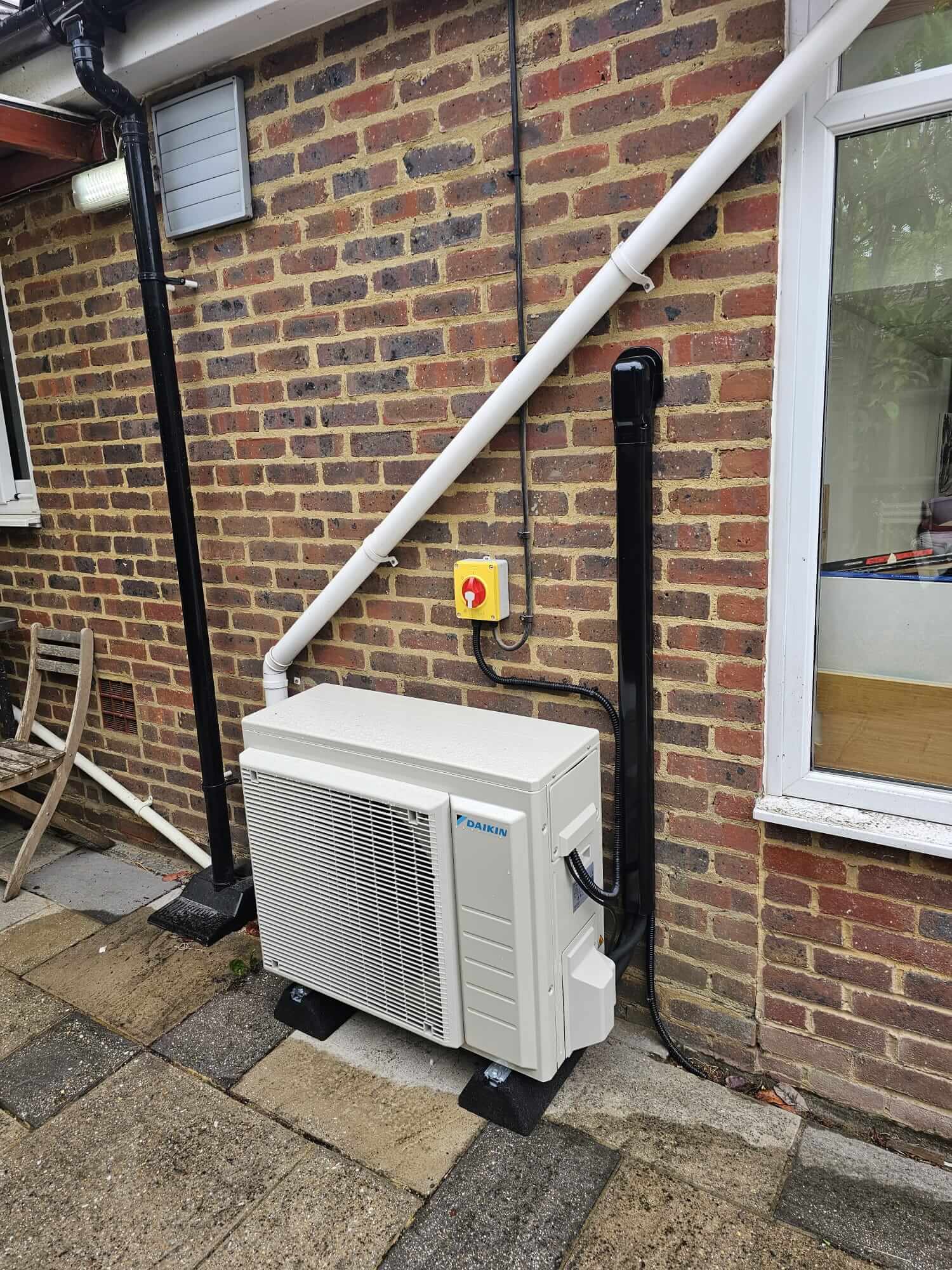
A quality unit, correctly sited and installed, is no louder than a modern condenser boiler flue. Positioning, vibration mounts and proper commissioning make a big difference.
“You will always need electric heaters as backup.”
Not if the system is sized correctly. Electric immersion is used for hot water back-up and sterilisation, not everyday space heating.
What happens during a heat pump survey?
When you book a survey with us, we typically:
- Walk through the property to understand room sizes, insulation and existing heating.
- Check radiators, pipework and cylinder (or discuss hot water options).
- Look at outdoor unit locations with you, including noise and aesthetics.
- Talk through budgets, timescales and any grant or funding options available.
- Provide a design-led quotation rather than a one-page “swap” price.
The goal is to make sure a heat pump is suitable before you commit, not after.
How to tell if your home is ready
You are probably ready to explore a heat pump seriously if:
- Your boiler is getting old or unreliable, and you are planning ahead.
- You are on oil, LPG or direct electric and want more predictable running costs.
- You are renovating and already looking at new radiators or underfloor heating.
- You want to cut your carbon footprint without sacrificing comfort.
If that sounds like you, the next step is a proper survey and design, not guesswork.
Next step: get tailored advice
Every property is different. Online calculators and generic articles can only take you so far. The most useful thing you can do is talk to an installer who works with real homes like yours in the South East every week.
If you would like specific guidance for your property, you can:
- Book a free survey so we can assess your home and provide a tailored proposal.
- Or send us your current energy bills and a few photos; we will give you an honest view of whether a heat pump is right for you.